
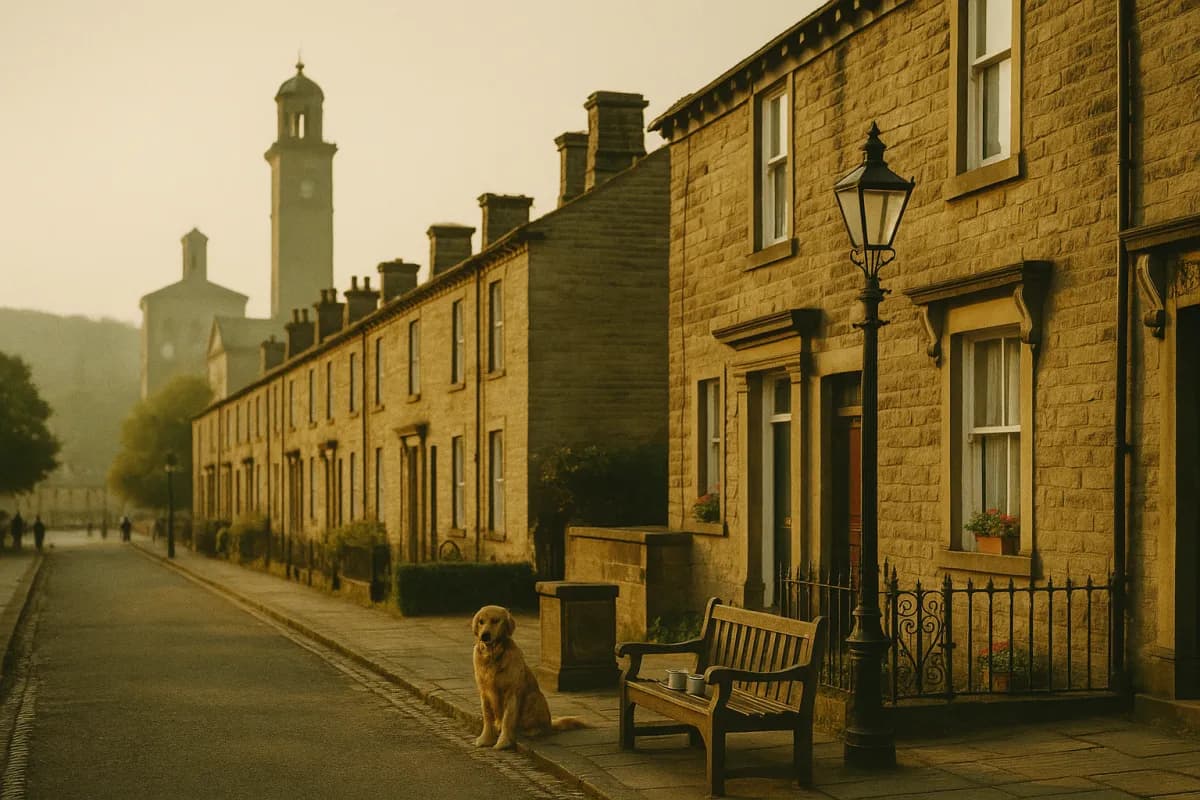
Plumbers in Saltaire & Shipley
This isn’t a list of plumbers we’ve never met, scraped from Google and dressed up as local. We live here. This page exists to give you honest, local plumbing guidance — and if you need someone, we’ll connect you with plumbers who actually know these terraces.
Plumbing in Saltaire’s terraces
Saltaire was built in the 1850s and 1870s as a model village. The terraces were advanced for their time — indoor plumbing, proper drainage, gas lighting. But “advanced for 1853” means something different in 2026.
Many of the original terraces on George Street, William Henry Street, and the surrounding grid still have sections of original lead pipework, especially on the cold feed from the street main. It’s usually fine — lead pipes in hard water areas like ours develop a mineral lining that prevents significant lead leaching — but if you’re replacing sections, a plumber familiar with the area will know what they’re looking at.
Someone from Leeds who’s never seen 170-year-old lead-to-copper joins is going to take longer and charge more. The 1970s-era properties along Higher Coach Road and the newer builds toward Shipley have standard 15mm copper or plastic push-fit systems. Nothing unusual there. The older terraces are where local knowledge actually matters.
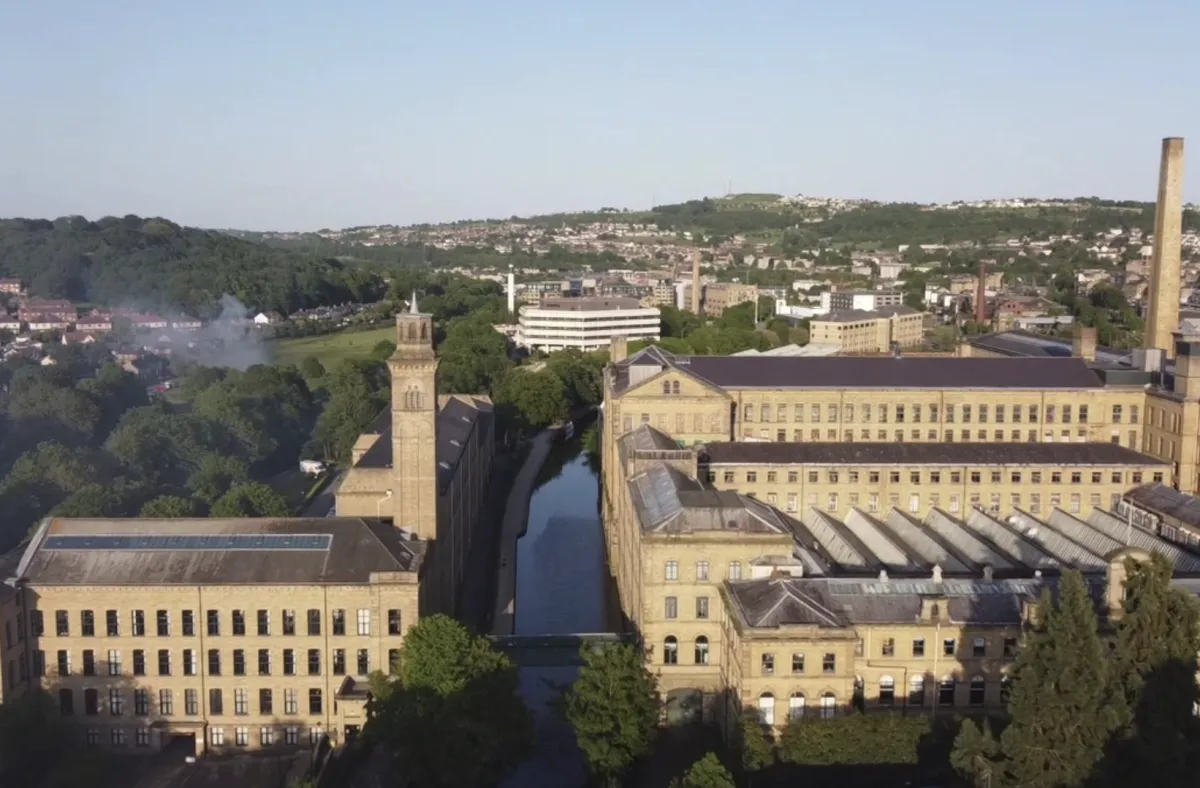
Saltaire’s grid of stone terraces — many still running original lead-to-copper pipework.
Conservation area rules
Saltaire is a UNESCO World Heritage Site. That sounds grand, but in practice it mainly affects external alterations. For plumbing, this means:
Boiler flue terminals
On street-facing walls may need Conservation Officer approval. Internal boiler replacements are fine — it's the visible external bits that trigger the rules.
External waste pipes
Added to front elevations can be refused. Your plumber should route new waste through internal or rear walls where possible.
Soil pipe replacements
If you're replacing a cast iron soil stack on a visible elevation, check with Bradford Council first. Most rear replacements go through without issue.
None of this is complicated, but a plumber who doesn’t know the area might not think to check, and you could end up having to undo work you’ve already paid for.
What things actually cost around here
Real ranges for the BD17/BD18 area. Not national averages, not London prices, not numbers pulled from a comparison site that hasn’t been updated since 2021.
- Emergency call-out
- £80–£200Covers first hour, basic repair
- Standard hourly rate
- £40–£65/hr
- Blocked drain clearance
- £60–£150
- Radiator repair/replacement
- £80–£250
- Annual boiler service
- £60–£90
- Full bathroom installation
- £2,500–£6,000Excluding tiling
The call-out fee is the one that catches people out. Always ask what it is before they arrive. A decent plumber will tell you upfront.
Emergency plumbing — what to do before they arrive
If water is actively leaking, the single most useful thing you can do is turn off the stop tap. Everything else — towels, buckets, moving furniture — is secondary to stopping the flow.
Where’s the stop tap?
In most Saltaire terraces, it’s under the kitchen sink, to the left of the waste pipe. Turn it clockwise to close. If it’s seized (common in older properties), don’t force it — you’ll snap the valve body and make things worse.
In newer Shipley builds, check the utility cupboard or under the stairs. Some flats have the stop tap in a shared riser — your building management should have told you where it is. If they haven’t, find out now, not during a flood.
Gas Safe — when you need it and when you don’t
There’s a common confusion: people think all plumbing work needs Gas Safe registration. It doesn’t. Boiler work, gas pipes, flues, gas cooker installations — yes, Gas Safe required. Leaking taps, blocked drains, radiators, bathroom installations (unless gas-connected), outside taps — a general plumber is fine.
Some plumbers are also Gas Safe registered — they can do both. Others work with a Gas Safe partner. Either is fine. What’s not fine is someone doing gas work without registration. Check the Gas Safe Register with their number before they start.
5-minute emergency checklist
- 1Turn off the stop tap (clockwise, under the kitchen sink in most terraces).
- 2If the stop tap is seized, turn off the external stop tap in the pavement chamber outside. You might need a stop tap key (about £5 from any hardware shop).
- 3If water is near electrics, switch off at the consumer unit — but only if it's safe to reach.
- 4Open a cold tap to drain residual pressure.
- 5Call a plumber. Give them your postcode, what's happening, and whether you've managed to stop the water.
Don’t use DIY sealant tape on a pressurised pipe. It won’t hold, and it makes the plumber’s job harder when they arrive.
Needs Gas Safe
- Boiler work
- Gas pipes
- Flue work
- Gas cooker install
- CP12 certs
General plumber
- Leaking taps/pipes
- Blocked drains
- Radiators
- Bathrooms
- Outside taps
Saltaire Guide · Consult
1 / 10
What’s happening?
Pick the closest one — we’ll shape everything else around it. You can change your mind later.
How to not get ripped off
Most plumbers are decent people doing hard work. But the emergency nature of plumbing — water is coming through your ceiling, your boiler’s died in January — creates conditions where some take advantage.
- 1
Get the call-out fee in writing before they arrive.
Text or WhatsApp is fine. "What's your call-out fee for BD18?" If they won't answer, call someone else.
- 2
Ask for an estimate before they start work.
Not a binding quote — just a ballpark. "Roughly what are we looking at?" A good plumber will give you a range.
- 3
Don't pay cash without a receipt.
Not because cash is bad, but because a receipt means there's a paper trail. No receipt, no comeback.
- 4
Check insurance.
Any plumber working in your home should have public liability insurance. Ask to see it. If they can't show it, that's your answer.
- 5
Be wary of "while I'm here" upsells.
"Your system pressure is low, you need a new expansion vessel." Maybe. Or maybe it just needs repressurising, which takes 30 seconds and costs nothing.
Our accountability register
This is the bit that makes us different from every other local services page.
If you use a plumber — whether you found them through us or not — and the experience is genuinely bad (overcharging, no-shows, unsafe work, intimidation), you can report it to us. We don’t publish reports immediately or based on a single complaint. But if the same name comes up repeatedly with the same pattern, we will add them to a public accountability list with a factual summary of the complaints.
This isn’t a review site. We’re not collecting stars or ratings. It’s a factual register: this tradesperson has had X complaints about Y pattern, reported by Z different people. The tradesperson is always contacted before publication and given the opportunity to respond.
We think this is how local recommendations should work. Not anonymous reviews on Google that might be fake in either direction, but a transparent register maintained by people who actually live in the area and have to look their neighbours in the eye.
Common questions
Real questions from Saltaire residents. If yours isn’t here, ask us.
Can I change my boiler in a conservation area?
Yes. Internal boiler replacements don't need planning permission in Saltaire's conservation area. But if the flue exits through a visible external wall, the condensate pipe route or flue terminal placement might need Conservation Officer approval. Ask your Gas Safe engineer to check before ordering parts.
Where is the stop tap in Saltaire terraces?
Most original Saltaire terraces have the internal stop tap under the kitchen sink, to the left or right of the waste pipe. Some 1970s-era retrofits moved it to the cellar head or under the stairs. If yours is seized or missing, a plumber can fit an isolator valve in about 30 minutes — worth doing before you ever need it.
How much does an emergency plumber cost in BD18?
Expect £80–£200 for a standard emergency call-out in the Saltaire/Shipley area, depending on time of day and severity. That typically covers the first hour and basic repair. Parts, if needed, are extra. Always ask for the call-out fee upfront before they arrive.
Do I need a Gas Safe engineer for a leaking radiator?
No — a leaking radiator valve or bleeding radiators is general plumbing work. You only need Gas Safe registration for anything involving the boiler, gas pipes, or flue. If someone tells you otherwise, they may be upselling.
How do I know if a plumber is legitimate?
Ask for their public liability insurance details and any trade body membership (WaterSafe, CIPHE, or Checkatrade). For gas work specifically, check the Gas Safe Register online with their registration number. If they can't provide any of this, find someone who can.
What should I do if I smell gas?
Open windows, don't switch anything electrical on or off, leave the property, and call the National Gas Emergency Line on 0800 111 999. This isn't plumber territory — it's a gas emergency. Don't go back in until they've cleared it.
Can I fix a dripping tap myself?
Usually, yes. Most dripping taps need a new washer (50p from any hardware shop). Turn off the water at the stop tap, unscrew the tap head, replace the washer, reassemble. There are good videos online for your specific tap type. If the tap body itself is corroded, that's when you call someone.
Is it worth getting a boiler cover plan?
It depends on your boiler age. If it's under 5 years old and still under manufacturer warranty, a cover plan is probably wasted money. If it's 8–12 years old, a plan at £15–£20/month might save you one big bill. Over 15 years, you're likely better saving that monthly cost toward a replacement — cover plans often exclude older boiler parts.
Other local services
Honest guides for every trade. Same editorial approach, same accountability.